

The core of purchasing a gantry crane is matching usage needs with safety compliance. This requires a comprehensive assessment from key dimensions such as load capacity, operating environment, and performance to avoid compatibility issues or safety hazards later on.
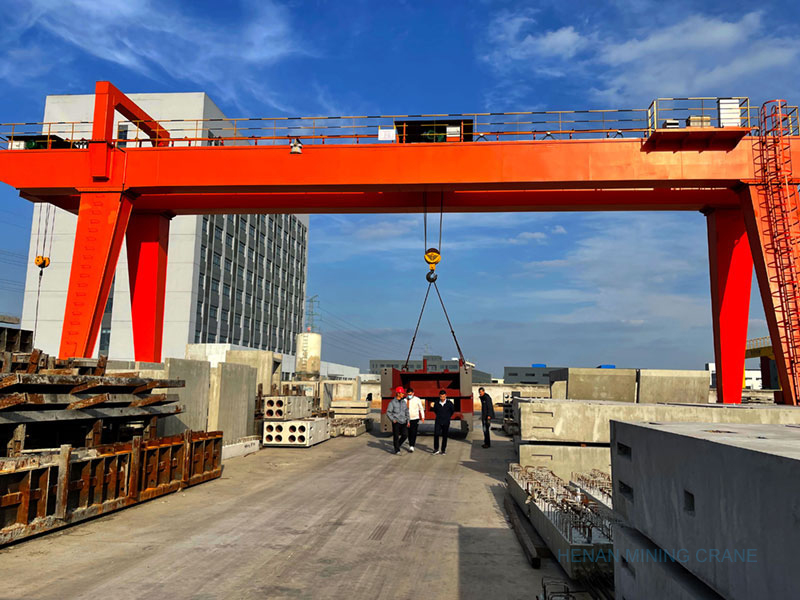
1. Core Load and Operational Requirements
Define the rated lifting capacity and select a model with a 10%-20% margin above the actual maximum lifting weight to avoid long-term overloading.
Confirm the lifting height and span to cover the vertical and horizontal space of the operating area, allowing for some redundancy.
Consider the operating frequency. High-frequency continuous operation requires a high-strength structure (such as double-girder or box girder), while low-frequency light operation can use a simpler model.
2. Usage Scenarios and Installation Conditions
Site limitations: For indoor/workshop use, choose a rail-mounted or small mobile model. For outdoor/port use, consider wind and rain protection. Open spaces are suitable for large-span models.
Ground conditions: Hardened ground allows for push/electric mobile models. Long-term fixed operation requires a poured track foundation; confirm that the ground's load-bearing capacity is sufficient.
Environmental Factors: High-temperature, dusty, and corrosive environments require models made of special materials (such as stainless steel) or with upgraded protection.
3. Equipment Performance and Structural Type
Structural Selection: Single-beam models are low-cost and easy to install, suitable for loads under 50 tons; double-beam models offer strong stability and high load-bearing capacity, suitable for heavy loads or large-span scenarios.
Operation Method: Rail-mounted models are suitable for fixed-route operations; mobile (wheel-mounted) models are suitable for flexible lifting in multiple areas, requiring matching to site relocation needs.
Control Method: Manual control is suitable for small, simple models; electric remote control and cab operation are suitable for large or high-frequency operations, improving efficiency and safety.
4. Safety Compliance and Quality Assurance
Manually selected manufacturers with production qualifications and 3C certification are required. Equipment must be accompanied by a certificate of conformity and test report.
Core Components: Inspect the materials and warranty of key components such as wire ropes, brakes, and pulleys; prioritize components from well-known brands.
Safety Configuration: Ensure the vehicle is equipped with basic safety functions such as overload protection, limit switches, and emergency braking. For special scenarios, windproof rail clamps and lightning protection devices are required.
5. After-sales Costs and Service Support
Pricing and Budget: Balance initial purchase costs with long-term operating costs, avoiding purchasing low-priced products with inferior materials and no after-sales support.
Installation and Maintenance: Confirm whether the manufacturer provides on-site installation and commissioning services, and understand the supply of vulnerable parts and the speed of repair response.
Energy Consumption and Environmental Protection: Prioritize energy-efficient motors to reduce long-term electricity costs and comply with local environmental regulations.