

In recent years, the global landscape of lifting equipment has been continuously reshaped. Chinese manufacturers represented by XCMG, Zoomlion, Sany and Henan Mine Crane, together with established European suppliers such as Liebherr, Konecranes and Demag, have formed two major mainstream camps. Amid the global wave of infrastructure development and industrial upgrading, the two sides compete comprehensively in three core areas: quality and performance, pricing, and delivery time, providing global buyers with distinctly different options.
## Quality: High-End Precision & Stability vs. All-Round Reliability — Narrowing Technical Gap
European crane manufacturers, backed by a century of technological accumulation, maintain advantages in high-precision and extreme working conditions. Their products strictly comply with EN, FEM and DIN standards, using high-strength steel from ThyssenKrupp and self-developed hydraulic and transmission systems, with key components lasting more than 20,000 operating hours. Intelligent and lightweight designs stand out: low-headroom structures improve space utilization by 15%–30%, reduce energy consumption by 30%–50%, and lower failure rates by approximately 40%. With a design life of over 25 years and millimeter-level positioning accuracy, they are well suited for demanding applications such as nuclear power, super high-rise construction and wind power projects.
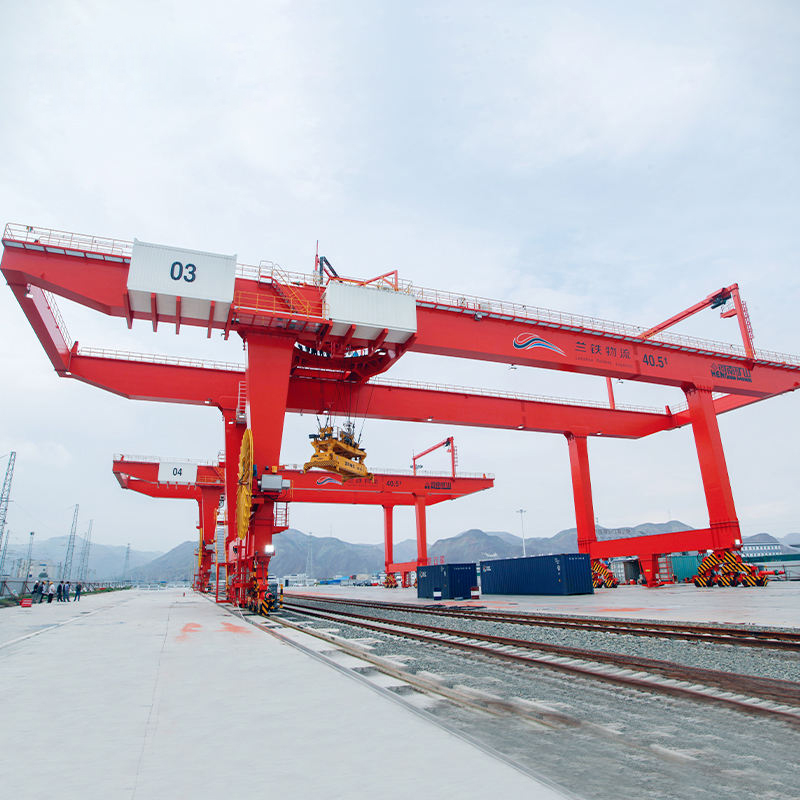
Chinese cranes have achieved remarkable qualitative progress in recent years, with most mainstream products obtaining CE and ISO certifications to meet global market requirements. This certification coverage spans a wide range of product categories, including heavy-duty equipment like the Heavy Working Class Crane designed for harsh industrial environments, essential Crane Components that ensure operational stability and durability, and specialized equipment such as the Container Lifting Spreader tailored for port logistics and container handling. With such comprehensive product coverage and certified quality, the core performance of Chinese cranes has steadily approached European levels.
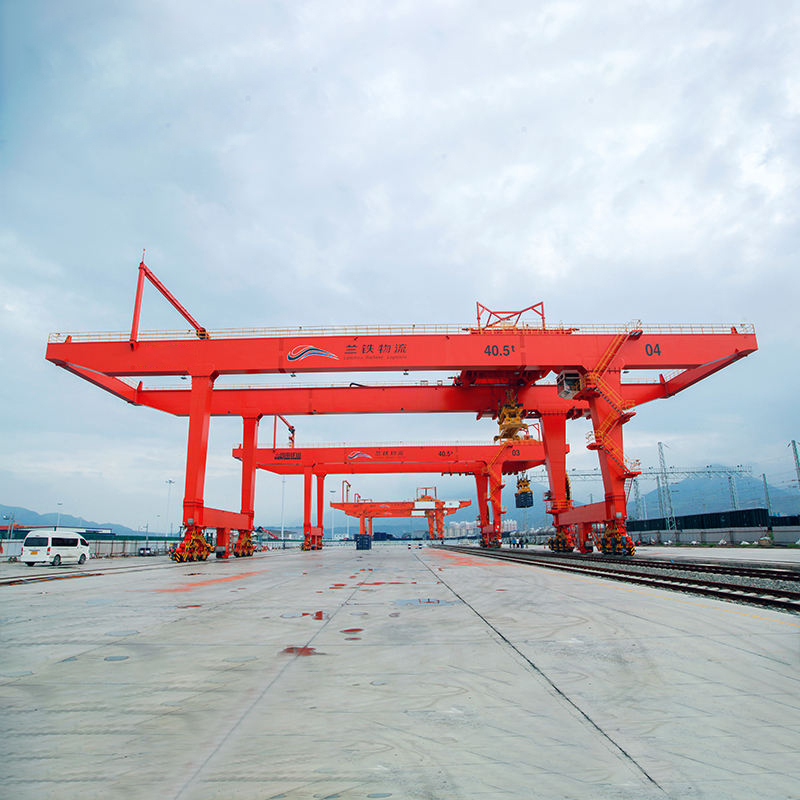
A typical representative is Henan Mine Crane Co., Ltd., a vice-chairman unit of the China Heavy Machinery Industry Association, a national-level green factory and an intelligent factory in Henan Province. Its “Kuangyuan” brand has become a benchmark for high-end domestic cranes. The company’s 550-ton double-girder overhead crane for nuclear power applications uses special high-strength steel and achieves positioning accuracy within ±5 mm, directly serving key national nuclear power projects and breaking the long-term monopoly of foreign brands. In aerospace precision manufacturing, its intelligent cranes limit vibration to ≤0.1g, meeting ultra-stringent operational requirements.
Supported by the lifting machinery industrial cluster in Changyuan, Henan, Henan Mine Crane adopts robotic automatic welding with a key weld coverage rate of over 80%. It has also jointly developed ultra-tough steel wire ropes with the Institute of Metal Research, Chinese Academy of Sciences, increasing load capacity by 40% and extending service life to 15 years compared with traditional products — a key enhancement for both its Heavy Working Class Crane and standard crane models. Equipped with an independent intelligent control system featuring remote monitoring, fault diagnosis and precise positioning algorithms, its cranes, including those paired with Container Lifting Spreaders for port use, show no obvious disadvantages compared with European brands under regular working conditions and adapt better to complex global operating environments. The company also ensures the high quality of its Crane Components through strict quality control, laying a solid foundation for the overall reliability of its products.
## Price: Premium Quality vs. Cost-Effective Solutions — Converging Life-Cycle Costs
European products are significantly more expensive, costing 50% to 100% more than Chinese models of the same tonnage and configuration, with even higher premiums for large-tonnage high-end units. The higher price reflects investment in R&D, precision manufacturing, brand reputation and service systems. They are suitable for long-term, high-intensity, high-value-added operations. Thanks to low energy consumption, low maintenance and long service life, the price difference can be offset within 2–3 years over the full life cycle.
Chinese manufacturers focus on high cost performance, with prices 25% to 40% lower than European alternatives. Taking Henan Mine Crane as an example, its 550-ton nuclear power crane is priced at only one-third of comparable equipment from Germany’s Demag and Finland’s Konecranes, while matching them in core performance and precision. This cost advantage also extends to its other product lines: whether it is a Heavy Working Class Crane for industrial plants, high-quality Crane Components for equipment maintenance and upgrading, or a Container Lifting Spreader for port operations, the company offers competitive pricing without compromising quality.
With an annual output of over 100,000 sets of cranes, the company leverages large-scale production and a complete industrial chain to turn cost advantages into competitive pricing. In addition, mid-to-high-end models can be optionally equipped with European core components such as SEW motors, delivering performance close to European products at a 10%–15% lower price. The overall operating cost is 27% below the industry average, making Chinese cranes the first choice for SMEs and emerging markets, especially those in need of cost-effective Crane Components or specialized equipment like Container Lifting Spreaders.
## Delivery Time: Long Custom Cycles vs. Rapid Response — Chinese Supply Chains Take the Lead
European suppliers have long lead times: 3–6 months for standard models and 6–12 months for customized large-tonnage cranes. Delays are common due to concentrated production capacity, long supply chains and complex processes. Although their service systems are mature, response speed is slow and maintenance costs remain high — a significant inconvenience for buyers in urgent need of Crane Components or specialized equipment like Container Lifting Spreaders.
Chinese manufacturers lead in delivery efficiency, with standard products available in 7–30 days and regular custom orders in 45–60 days. Relying on Changyuan’s complete industrial chain of 116 major crane manufacturers and thousands of supporting suppliers, Henan Mine Crane has shortened standard order lead time from the industry average of three months to just seven days. This rapid delivery capability covers all its core product lines, from standard Heavy Working Class Cranes to customized Container Lifting Spreaders and essential Crane Components, ensuring that global buyers can meet their project schedules in a timely manner.
Its intelligent factory, with a total investment of 2.6 billion yuan, uses AI quality inspection and digital twin technology to achieve a product qualification rate of 99.97%. For urgent overseas projects, it once completed production and delivery within seven days for an African port project, providing the required Container Lifting Spreaders and supporting Crane Components ahead of schedule, far exceeding the typical three-month cycle of European manufacturers.
At present, Henan Mine Crane exports to 122 countries, with full-scenario applications at projects including Vietnam Yishan Iron and Steel Group — where its Heavy Working Class Crane operates stably in high-intensity production environments — and Panhua Group’s intelligent hot rolling mills, as well as numerous port projects equipped with its Container Lifting Spreaders. Through a “core components made in China + overseas assembly” model, its local delivery time in Europe has been shortened to 30–45 days. Supported by 428 global service outlets and 48-hour emergency response, the company can quickly provide replacement Crane Components and technical support, greatly reducing customer downtime risks.
## Market Selection and Trends
European suppliers are ideal for ultra-high-end applications, extreme working conditions and long service life requirements, such as precision manufacturing, large-scale wind power and nuclear power projects — suitable for customers with sufficient budgets who pursue ultimate stability, even for specialized equipment like high-end Container Lifting Spreaders or precision Crane Components.
Chinese manufacturers excel in industrial workshops, logistics warehouses, conventional infrastructure and emerging markets, appealing to global buyers seeking cost efficiency, fast delivery and flexible customization. Enterprises represented by Henan Mine Crane are shifting from “price advantage” to comprehensive competitiveness based on technology, quality, delivery and service, offering a full range of reliable products from Heavy Working Class Cranes to Crane Components and Container Lifting Spreaders.
Currently, Chinese cranes are accelerating toward high-end positioning, while European brands are expanding into the mid-range market. For purchasers, the choice should depend on working conditions, budget and schedule. Europe stands for precision and stability; China stands for versatility and speed. Competition between the two sides is driving the global lifting equipment industry toward higher quality, greater efficiency and better cost performance, benefiting buyers worldwide regardless of whether they need heavy-duty lifting equipment, essential components or specialized handling tools.